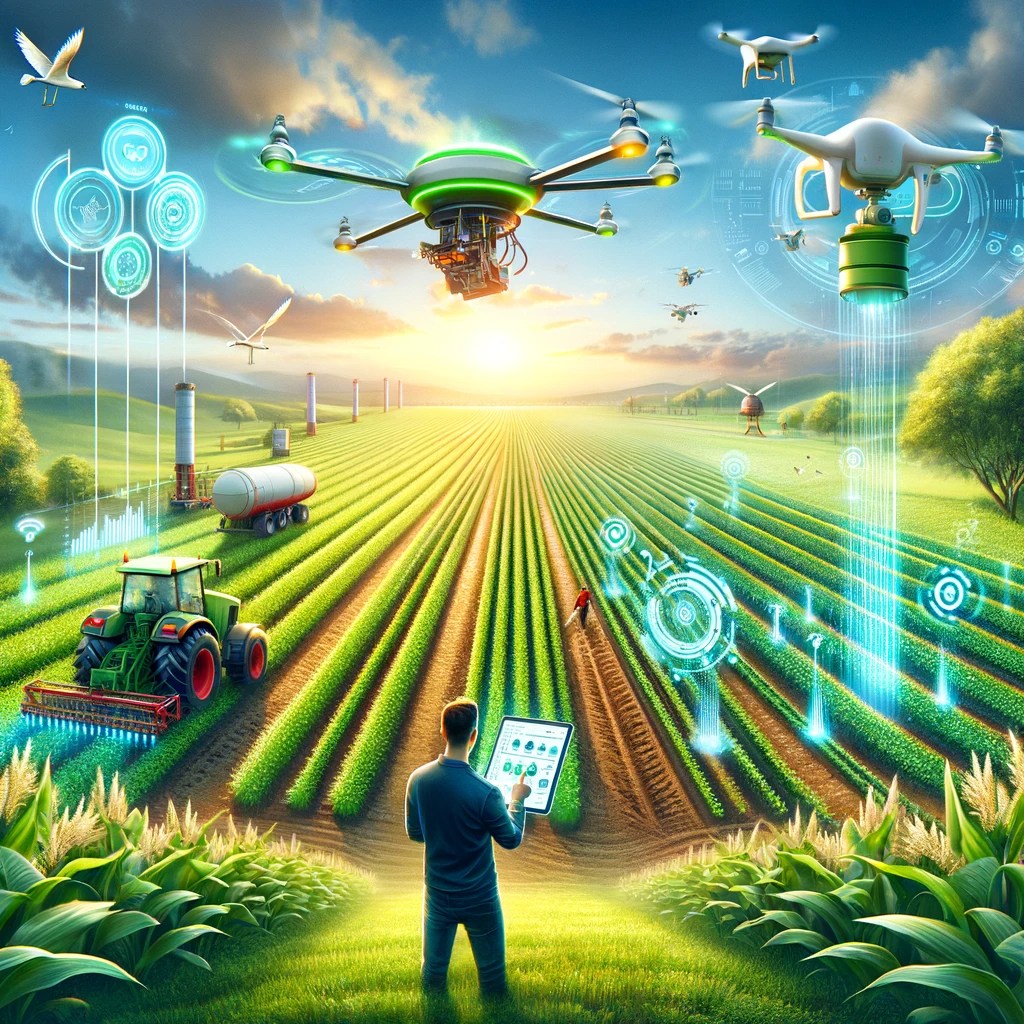
Farmers worldwide face many challenges that threaten their practices’ efficiency and sustainability. From unpredictable weather patterns due to climate change to increasing pressures to produce more food to meet the demands of a growing global population to managing the health and yield of crops against a backdrop of decreasing arable land, these are just a few of the significant issues confronting today’s agricultural sector.
In response, the integration of technology in agriculture, often referred to as agtech, presents a transformative opportunity to address these challenges head-on. Technologies spanning the Internet of Things (IoT), software innovations, automation, robotics, and more are at the forefront of this revolution.
Here’s a broad look at these technologies and the solutions they can offer:
- Precision Agriculture & Vertical Farming: Technologies optimise crop yields through precise resource application and indoor farming methods. This includes using drone imaging, data analytics, and robotics for decision-making, which reduces environmental impact and optimises operations.
- Sensors and IoT Devices: Play a critical role in monitoring soil conditions, nutrient levels, and moisture, helping optimise resource usage and enhance crop health.
- Drones/Aerial Imaging: Offer aerial insights for early detection of plant stress, pest infestations, and water irregularities, enabling targeted interventions.
- Robotics and Automation: Used for tasks such as planting, harvesting, and crop maintenance, reducing labour costs and increasing efficiency.
- Biotechnology and Genetic Engineering: Develop crops with desirable traits such as drought tolerance or enhanced nutritional content, improving crop yields and resistance to pests and diseases.
- Agricultural Data Analytics & AI: Process vast amounts of data for insights and recommendations, enhancing decision-making and predictive capabilities for future yields or identifying risks.
- Blockchain for Supply Chain Management: Enhances traceability and transparency, ensuring food safety and enabling consumers to learn about the origin of their food.
Benefits to Farms and Farmers
- Increased Crop Yields and Quality: Through precision farming techniques, genetically modified crops and new varieties better adapted to local conditions.
- Reduction in Environmental Impact: Utilising sustainable farming practices and precision techniques to minimise input use, improving soil health and reducing potential for contamination.
- Creation of New Opportunities: The development of new technologies creates job opportunities and makes farming more profitable, attracting investment to rural areas.
- Efficiency and Cost Reduction: Implementing smart farming practices and precision agriculture results in more efficient resource use, reduced waste, and reduced costs.
- Sustainability: Precision agriculture minimises the use of water, pesticides, and fertilisers, contributing to more sustainable farming practices.
The adoption of agtech not only addresses immediate operational efficiencies and sustainability concerns but also positions farming for future challenges, including those posed by climate change and food security.
And the collaborative nature of the agtech ecosystem ensures that innovations continue to evolve, benefiting farms of all sizes and scales.


Please feel free to let me know what you think